
At senior levels of leadership, decisiveness is often misunderstood.
Many assume it means speed.
Faster decisions.
Immediate responses.
Constant movement.
But urgency is not the same as decisiveness.
In fact, urgency often signals instability.
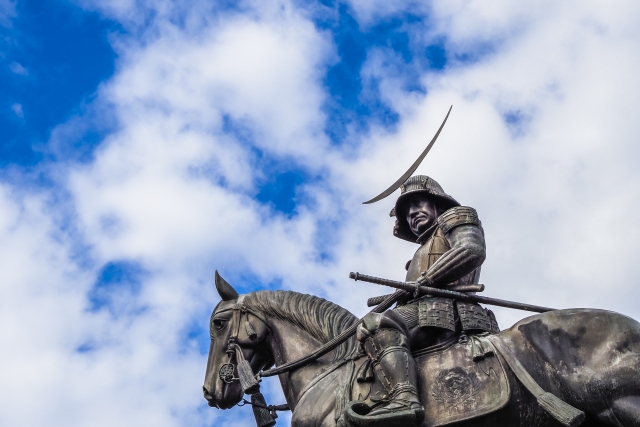
The Samurai understood this distinction deeply.
Their actions were precise, immediate when necessary—
yet never rushed.
The Cost of Urgent Leadership
Modern leadership environments reward reaction.
Emails demand instant replies.
Meetings follow one another without pause.
Decisions are expected quickly, visibly, continuously.
Over time, this creates a subtle pressure to act before clarity arrives.
Leaders move fast, but feel internally unsettled.
Action continues, yet confidence erodes.
This is not a failure of competence.
It is a failure of timing.
The Samurai Did Not Rush — They Were Ready
For the Samurai, action was inevitable.
What mattered was when and from where it emerged.
They trained to remain grounded until the exact moment action was required.
No earlier.
No later.
Urgency was avoided because it distorted perception.
Action taken from urgency is reactive.
Action taken from presence is decisive.
Zen, Matcha, and the Rhythm of Action
Zen training was never about stillness alone.
It was about regulating inner rhythm.
Matcha played a quiet role in this discipline.
Consumed not for stimulation, but for balanced alertness,
matcha supported a state that was awake yet steady—
ready, but not restless.
In the tea room, timing mattered.
Every movement followed a natural pace.
That rhythm carried into action.
Not hurried.
Not delayed.
Simply appropriate.
Decisiveness Emerges From the Body
Modern leaders often believe decisions are made in the mind.
But the Samurai understood something different:
When the body is stable, decisions arrive cleanly.
Breath settles perception.
Posture aligns intention.
The nervous system quiets unnecessary signals.
Only then does action become obvious.
This is why decisive leaders often describe their best decisions as felt, not calculated.
Acting Without Pushing
Urgency pushes.
Decisiveness releases.
One strains toward an outcome.
The other allows the next step to appear.
The Samurai trained for this release.
They did not accelerate themselves.
They removed resistance.
Zen practice and simple rituals—like preparing matcha—served as daily recalibrations.
Not escapes from action,
but preparations for it.
Leadership in the Space Before Action
The most important moment in leadership often comes before action.
Before speaking.
Before deciding.
Before committing resources or direction.
That brief space—if entered consciously—changes everything.
This is where urgency dissolves
and decisiveness becomes effortless.
The Samurai did not fill this space with thought.
They trusted it.
The Quiet Strength of Timed Action
Decisiveness without urgency feels almost invisible.
There is no drama.
No forcing.
No explanation afterward.
Yet the impact is immediate.
Teams feel it.
Situations shift.
Momentum aligns.
In a world that equates speed with strength,
this quieter approach stands out.
It is not slower.
It is exact.
And it is learned not through strategy,
but through presence—
cultivated, day after day,
sometimes with nothing more than a bowl of matcha.
Author note
This article is part of Matcha Moments, a modern exploration of matcha, Zen,
and the Samurai mind in everyday life.
Comments