
There is a stage in leadership where advice stops being useful.
Not because leaders stop learning,
but because most guidance continues to assume the same thing:
That better thinking will solve the problem.
For a long time, it does.
Strategy, analysis, forecasting, and intelligence build success.
But eventually, leaders reach a quieter limit.
Not a lack of answers —
but an overload of them.
The Hidden Cost of High-Level Thinking
At senior levels, thinking never stops.
Decisions affect people, capital, reputation, and direction.
Every choice echoes.
The mind responds by running continuously:
- reviewing past decisions
- simulating future risks
- rehearsing conversations that may never happen
This is not weakness.
It is responsibility.
But when thinking becomes constant, something subtle is lost: clarity.
Not intellectual clarity —
but situational clarity.
The ability to sense what must be done now.
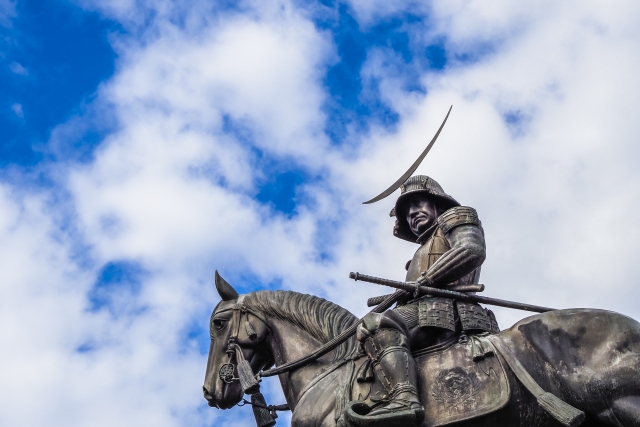
Why the Samurai Did Not Rely on Thought at the Critical Moment
The Samurai faced a different kind of pressure,
but the structure was similar.
Decisions were final.
Hesitation carried consequences.
They did not train to think better in battle.
They trained to remove internal interference.
Zen was not philosophy for them.
It was a practical discipline for action.
When the moment arrived,
thinking stepped aside.
What remained was presence.
Presence Is Not Calmness
Presence is often misunderstood as relaxation.
For leaders, presence is something sharper.
It is:
- awareness without internal commentary
- action without emotional drag
- decisiveness without aggression
Presence does not eliminate pressure.
It allows pressure to exist without distorting perception.
This is why highly capable leaders sometimes feel strangely ineffective:
their intelligence is working against them.
The Shift From Control to Stability
Many leadership systems focus on control:
- controlling outcomes
- controlling people
- controlling narratives
The Samurai approach was different.
They focused on stability.
A stable inner state produces appropriate action without effort.
When stability is present:
- fewer words are needed
- decisions land cleanly
- authority is felt, not asserted
This is not something that can be optimized.
It can only be entered.
Why Zen Matters Now
Modern leadership environments are fast, abstract, and disembodied.
Most decisions are made:
- sitting
- thinking
- reacting to screens
Zen reintroduces something leaders rarely notice is missing:
the body as a source of intelligence.
Breath, posture, timing, restraint.
Not as techniques —
but as anchors.
When thinking reaches its limit,
presence becomes the advantage.
The Quiet Edge
The Samurai did not seek certainty.
They trained readiness.
They did not eliminate fear.
They eliminated hesitation.
For modern leaders, Zen is not about becoming spiritual.
It is about becoming undistracted.
And in an environment saturated with noise,
that is no longer philosophical.
It is decisive.
Author note
This article is part of Matcha Moments, a modern exploration of matcha, Zen,
and the Samurai mind in everyday life.
Comments