
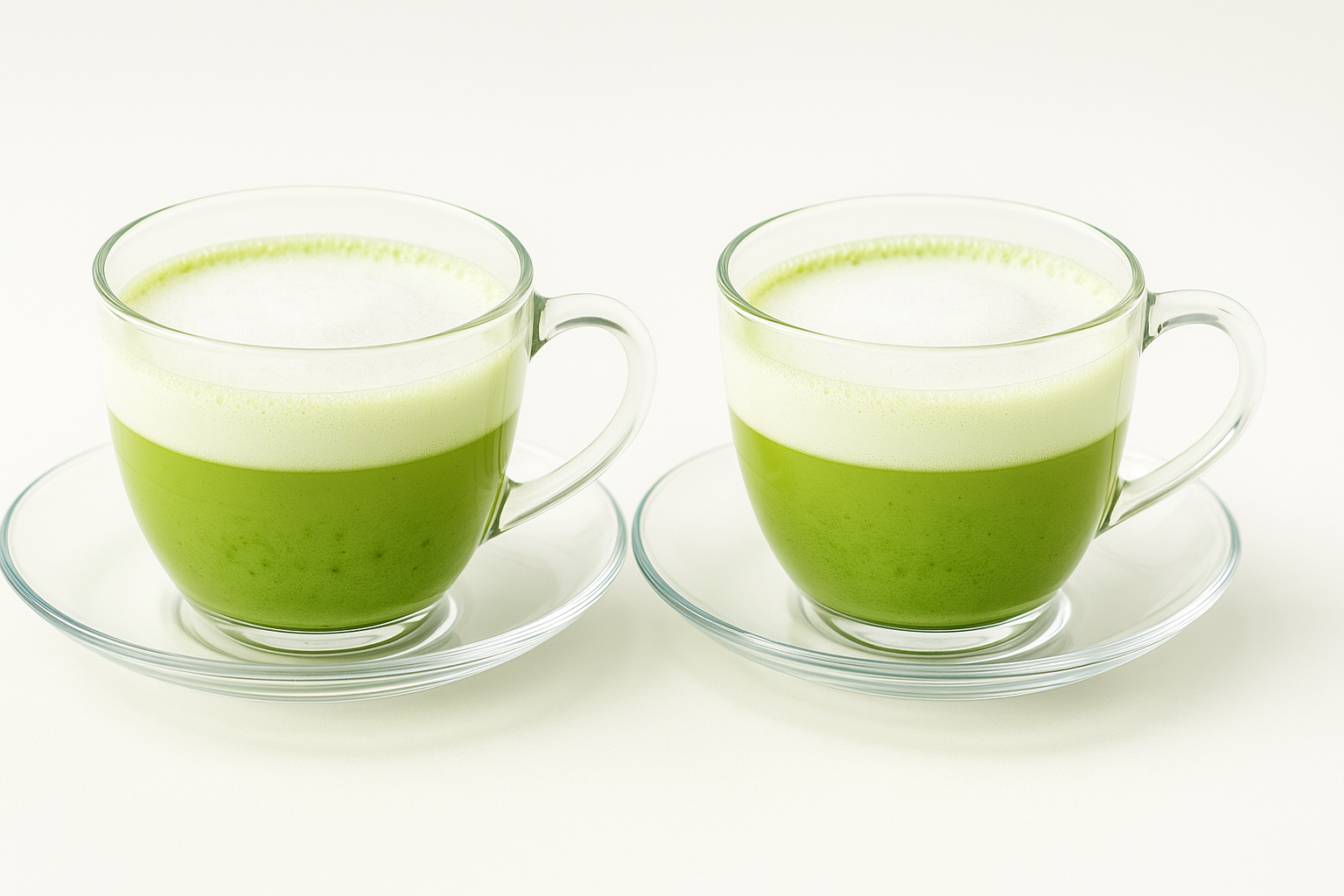
Matcha is often discussed in the context of weight loss.
Burning fat.
Boosting metabolism.
Increasing energy.
These claims are not entirely wrong.
But they are often framed in a way that misunderstands how the body actually works.
Matcha does not push the body to burn fat.
It supports conditions in which the body can let go naturally.
That difference matters.
Fat Burning Is Not About Aggression
Many diet approaches rely on stress.
More stimulation.
More restriction.
More effort.
In the short term, this can produce visible results.
But the body interprets constant pressure as a threat.
When stress remains high, fat loss becomes harder—not easier.
Matcha works differently.
Its effect is subtle, cumulative, and stabilizing.
The Science Behind Matcha and Metabolism
Matcha contains compounds known to support metabolic function, most notably:
- Catechins, especially EGCG
- Caffeine, in a gentler form
- L-theanine, which moderates stimulation
Together, these create a state of calm alertness.
Rather than spiking energy, matcha smooths it.
Rather than forcing fat burning, it supports metabolic efficiency.
This is why matcha is often associated with sustained energy rather than crashes.
Calm Focus and the Body’s Natural Rhythm
Fat burning is not a single action.
It is a background process influenced by hormones, stress levels, and nervous system balance.
When the body is chronically tense, it holds on.
When the body feels safe and regulated, it releases.
Matcha supports this regulation.
By calming the nervous system while maintaining alertness,
matcha creates an internal environment where excess is less tightly held.
This is not dramatic.
But it is reliable.
Why Matcha Is Not a “Diet Tool”
Matcha was never designed as a diet aid.
Historically, it was used to sustain awareness during long periods of meditation and disciplined practice.
That context matters.
The body responds best to consistency, not force.
Daily rituals—small, repeated, embodied—shape long-term change.
Preparing matcha slows the hands.
Drinking it warms the body.
The bitterness brings attention into the present moment.
These effects influence metabolism indirectly, but meaningfully.
Fat Loss as a Byproduct, Not a Goal
In Matcha Moments, fat burning is never presented as a promise.
It is presented as a byproduct.
When energy is steady, overeating decreases.
When focus is calm, impulsive habits soften.
When the nervous system stabilizes, the body stops defending excess.
This is why matcha supports healthy weight management without effortful control.
Nothing is forced.
Nothing is rushed.
Who Matcha Works Best For
Matcha tends to support fat burning most effectively for people who:
- are sensitive to strong stimulants
- feel tense or overdriven
- struggle with stress-related weight patterns
It is not a shortcut.
It is a quiet adjustment.
For many, that makes all the difference.
A Gentle Entry Point
Matcha does not demand change.
It offers a different rhythm.
Over time, that rhythm reshapes how the body uses energy—and how it releases what it no longer needs.
This is not the language of dieting.
It is the language of balance.
And it is why matcha continues to support well-being long after trends fade.
Author note
This article is part of Matcha Moments, a modern exploration of matcha, Zen,
and the Samurai mind in everyday life.
Comments