
Most leadership advice focuses on thinking.
Think more clearly.
Analyze more deeply.
Make better decisions.
And for a long time, that works.
But at a certain level of responsibility, leaders encounter a different problem—
not a lack of intelligence, but an excess of it.
Too many variables.
Too many opinions.
Too much thinking, running endlessly in the background.
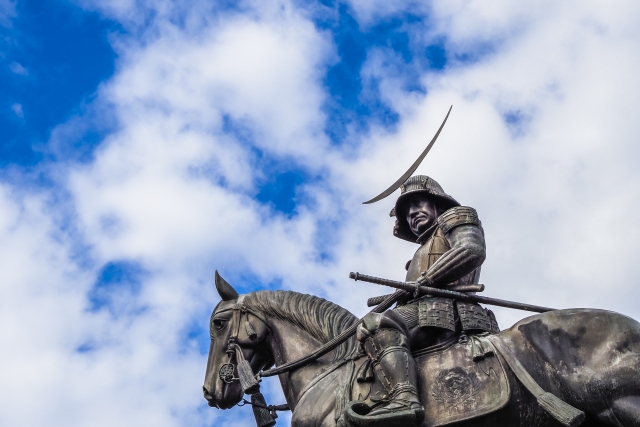
This is where the Samurai mind becomes relevant—not as history, not as philosophy, but as a practical mode of awareness.
The Samurai Were Not Calm Because Life Was Easy
It is tempting to romanticize the Samurai as disciplined warriors living by elegant codes.
The reality was harsher.
They lived with uncertainty, political instability, and constant pressure.
Decisions were irreversible.
Hesitation carried real consequences.
And yet, Samurai culture did not emphasize emotional suppression or constant calculation.
Instead, it cultivated presence before action.
Not thinking faster.
Not thinking harder.
But seeing clearly enough to move without delay.
When Thinking Reaches Its Limit
Modern leaders face a similar threshold.
In early stages of a career, thinking is an advantage.
Planning, forecasting, and optimizing create progress.
But at senior levels, something subtle shifts.
Overthinking becomes hesitation.
Analysis becomes noise.
Decision-making slows—not because information is missing, but because clarity is.
Many leaders sense this, but struggle to articulate it.
They feel the need for:
calm under pressure
decisiveness without aggression
intuition without impulsiveness
This is precisely where Zen intersects with the Samurai mind.
Zen Is Not About Becoming Passive
Zen is often misunderstood as withdrawal or detachment.
In Samurai culture, Zen served the opposite purpose.
Zen trained the mind to stop interfering at the critical moment.
Not empty for the sake of emptiness—
but quiet enough for action to emerge naturally.
A sword strike executed through excessive thought is slow.
A decision made through internal noise is unstable.
Zen was never about avoiding action.
It was about removing internal resistance to action.
Presence Is a Leadership Skill, Not a Personality Trait
Presence is often treated as something you “have” or “don’t have.”
But presence is not charisma.
It is not confidence.
It is the ability to remain here—
in the body, in the moment, in the situation—
without being pulled away by internal commentary.
Samurai trained this through repetition, ritual, and physical discipline.
Today, leaders encounter the same opportunity in quieter forms:
how you breathe before speaking
how you enter a meeting
how you pause before responding
These are not soft skills.
They are stabilizing forces.
Why This Matters Now
Modern leadership operates in constant acceleration.
Speed is celebrated.
Reaction is rewarded.
But speed without presence creates fragility.
The Samurai mind offers something different:
action without panic
authority without force
clarity without overexertion
This is not a technique to adopt.
It is a state to return to.
And once experienced, it quietly reshapes how decisions are made.
The Quiet Advantage
The Samurai did not seek motivation.
They trained stability.
They did not aim to dominate circumstances.
They aimed to remain unshaken within them.
In a world where leaders are overwhelmed by complexity,
the quiet mind is no longer philosophical.
It is strategic.
Author note
This article is part of Matcha Moments, a modern exploration of matcha, Zen,
and the Samurai mind in everyday life.
Comments